Aave Brings 12 New Supported Assets To Its Fresh Monad Lending Market
If you've been watching Monad's network activity climb this year and wondering whether there's a sensible way to put capital to work there without chasing speculative token launches, Aave just gave you a concrete starting point.
Loretta Cummings·updated July 05, 2026
What landed at launch
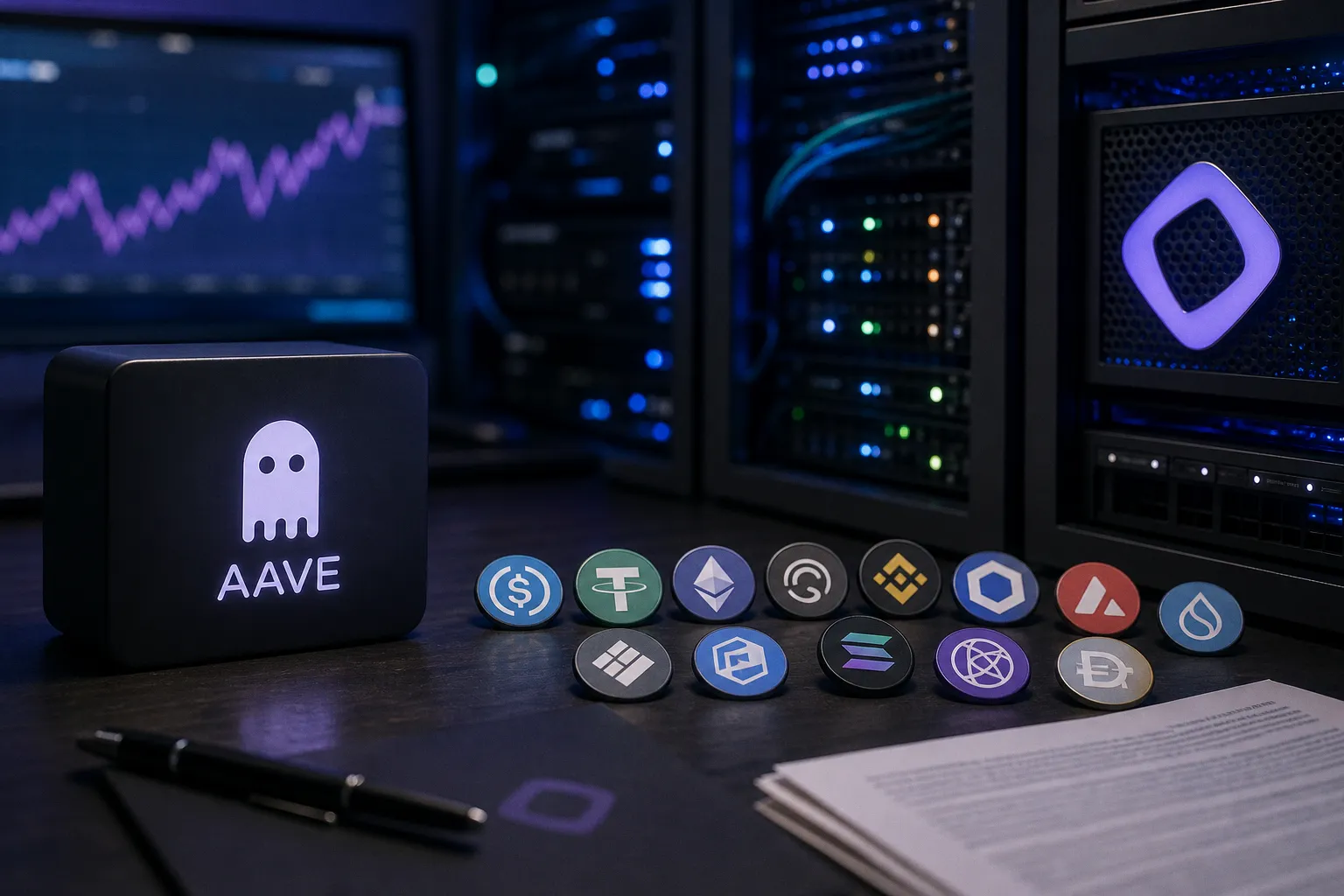
Aave's Monad market opens with six borrowable stablecoins (USDT0, USDC, GHO, USDe, mUSD and AUSD) and six collateral assets (WETH, cbBTC, wstETH, weETH, syrupUSDC and sUSDe). That mix is deliberate: borrowers get a wide menu of dollar options from the outset, while lenders can back positions with a blend of liquid majors and yield-bearing staked variants. The setup mirrors what Aave has done on other high-throughput chains, which I find reassuring when you're sizing a fresh deployment.
The Monad Foundation is seeding the market with a $15 million incentive package spread over the first 12 months, and it has committed to purchasing 10 million GHO tokens, holding them for at least six months. Aave's DAO has layered on another 500,000 GHO aimed at applications that choose to build on top of the new market. That alignment between the chain and the protocol is worth noting, because incentive alignment is what separates a durable lending market from one that thins out the moment emissions dry up.
What's structurally different here
Two mechanics from this rollout are worth your attention before you deploy anything. First, this is Aave's first use of Chainlink's Smart Value Recapture mechanism at launch, a system designed to return part of the value generated during liquidations back to the protocol rather than letting it leak to external block builders. For a passive income strategist, that's a meaningful shift in how sustainable baseline APY gets preserved across cycles.
Second, the GHO arrangement gives the market a built-in stablecoin with a deep homegrown liquidity line. When the native stablecoin is reinforced by both a chain-level commitment and DAO-level incentives, borrow demand tends to find it first, and that shapes where supply-side yield concentrates.
Practical trade-offs to weigh
Monad markets itself on parallel transaction processing and low fees, useful for active borrowers but only worth your time if the asset selection matches your collateral preferences. If you already hold weETH or a similar liquid-restaked token, this market gives you somewhere to deploy it without the fee drag of mainnet. If you're a stablecoin lender, you'll want to compare the post-incentive yield picture, since $15 million spread across a full year across 12 assets is meaningful but not unlimited.
Meanwhile Aave's own footprint keeps broadening: its largest single-day wallet growth in nearly five years just landed on July 1, with more than 1,800 new wallets added in a single day, and AAVE itself has climbed roughly 28 percent over the past month before easing near $84. That context matters because it tells you liquidity providers are paying attention, not retreating.
For now, my read is straightforward: this is a real lending market with real incentives and a few genuinely novel mechanics. Watch the first wave of borrow rates on the staked-asset collateral, watch whether the Chainlink recapture mechanism measurably improves capital efficiency, and resist the urge to size up before the incentive schedule is fully visible. Sustainable yield on a new chain rewards patience, not speed.